ACTutor, ACTrainer & ACInsight SDK

Affective-cognitive platform for adaptive learning and simulation-based training, powered by the core ACInsight SDK technology.

About the Project

The project aims to improve learning effectiveness and overcome the limitations of existing e-learning platforms and professional training simulators.

Most learning systems do not consider the learner’s current cognitive-affective state, even though mental effort, involvement, and emotional response can significantly influence learning performance.

By combining multimodal behavioral analysis with adaptive learning and training environments, the project will develop technology capable of personalizing content and simulation scenarios in real time. The goal is to improve learning efficiency, knowledge retention, trainee engagement, and the overall quality of training.

The resulting solution will be developed with relevant regulatory and data-protection requirements in mind, including the GDPR, the EU AI Act, and NIS2.

The technology

What Is Affective Computing?

AC stands for Affective Computing, an interdisciplinary field focused on developing systems that can detect, interpret, and process human emotions and cognitive states.

The project will develop a framework for assessing cognitive-affective states, together with machine learning models that combine signals from multiple sensors, including cameras, microphones, and wearable devices.

The resulting insights could be used to adapt learning content, teaching strategies, or simulation scenarios according to the learner’s or trainee’s current needs.

Current research targets

The project is currently exploring four broad cognitive-affective dimensions:

  • Cognitive Load The amount of mental effort required to process information or perform a task.
  • Engagement The level of involvement, attention, and interest a person has in a task or interaction.
  • Valence The positive or negative emotional value of an experience.
  • Arousal The level of physiological and psychological activation, independently of whether the experience is positive or negative.

These are preliminary target dimensions, not a fixed final set. The project team will refine which states can be estimated reliably after data collection and initial model training. Some states may also prove difficult to elicit consistently during data collection.

Objectives

Project Goals

The project aims to build the technological and methodological foundations for adaptive and more effective learning and training environments.

  1. Develop a framework for assessing human cognitive-affective states.
  2. Create machine learning models that combine data from cameras, microphones, wearables, and other sensors.
  3. Enable the real-time adaptation of educational content and professional training scenarios.
  4. Improve learning effectiveness, knowledge retention, and learner engagement.
  5. Evaluate whether simulation scenarios stimulate trainees in a way that accurately reflects real-life conditions.
  6. Develop the project solution in alignment with applicable data-protection, cybersecurity, and AI regulatory requirements.

The solution addresses new market opportunities, strengthens international competitiveness, and supports long-term business growth.

Three interconnected modules

The Product

The product combines a core cognitive-affective assessment platform with two practical implementations for digital learning and professional simulation.

Core platform

ACInsight SDK

A horizontal platform for the multimodal assessment of cognitive-affective states.

ACInsight SDK is being developed to process and combine signals from different sensors and estimate relevant cognitive-affective dimensions. It provides the technological foundation for both the ACTutor and ACTrainer modules.

E-learning

ACTutor

A plug-in for existing e-learning platforms.

ACTutor will use the cognitive-affective dimensions that the project can estimate reliably to support the adaptation of curricula, learning materials, and content-delivery strategies. Its purpose is to improve learning efficiency by adjusting the experience to the learner’s current needs.

Professional simulation

ACTrainer

An add-on for professional training simulators.

ACTrainer will help assess whether a trainee is being stimulated by a simulation scenario to a similar degree as they would be in a real-life situation. It is intended to provide additional evidence for evaluating simulation realism and improving professional simulation-based training.

Collaboration

Project Partners

University of Zagreb

Faculty of Humanities and Social Sciences

University of Rijeka

Faculty of Maritime Studies

Project updates

News from the Project

Follow project activities, partner collaboration, research milestones, and other important updates.

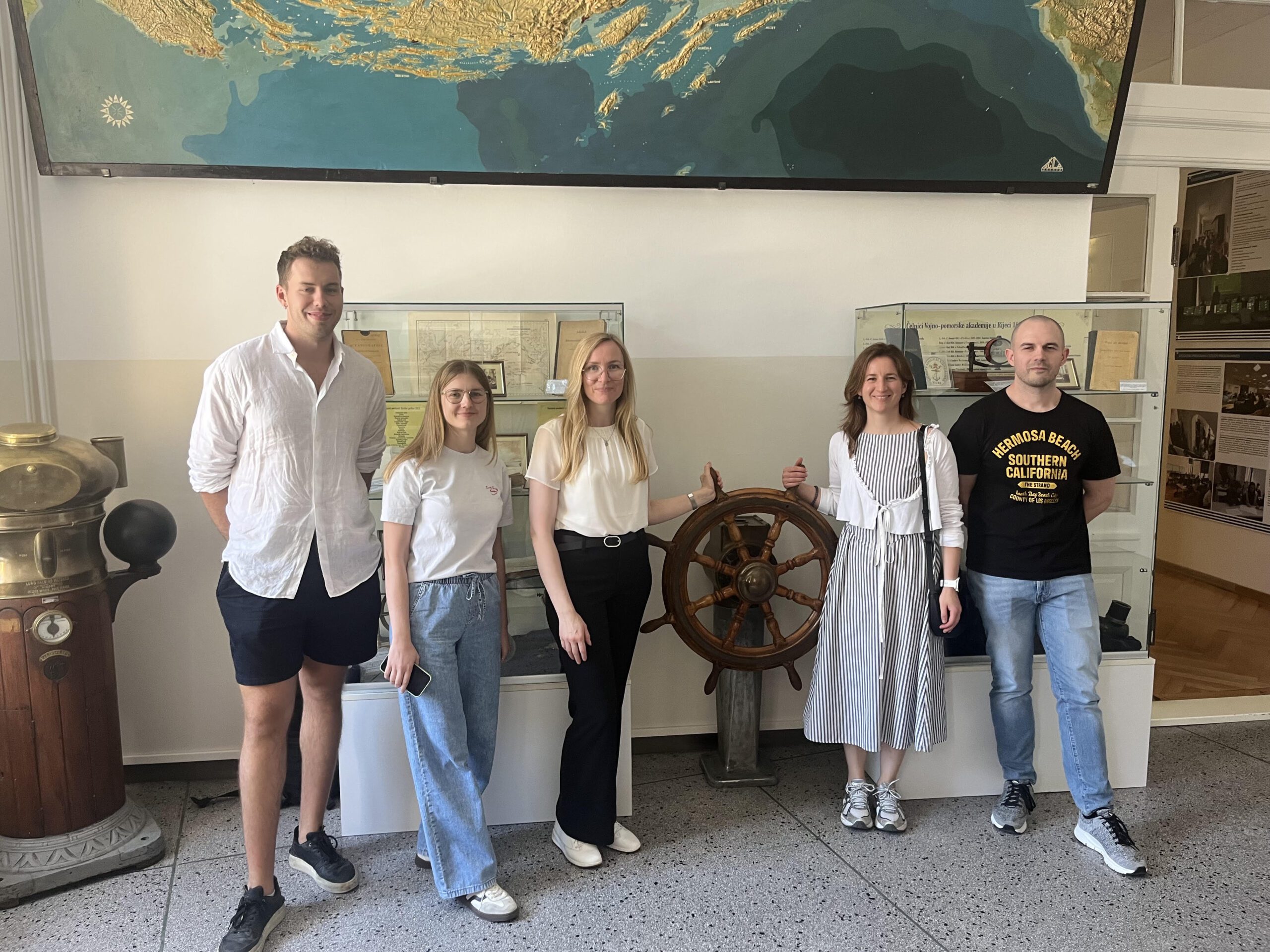
Project team members during a visit to the Faculty of Maritime Studies in Rijeka
Project visit Rijeka

Project Teams Visit the Faculty of Maritime Studies in Rijeka

Members of the IRI project teams from Visage Technologies and the University of Zagreb’s Faculty of Humanities and Social Sciences visited the Faculty of Maritime Studies at the University of Rijeka, one of the project partners.

During the visit, the team explored three simulators used for educational purposes at the Faculty. Because the ship-navigation simulator represents one of the project’s use cases, the partners reviewed in detail how the simulations are conducted, which devices are required to capture input signals, how those devices could be positioned within the simulator, and which cognitive-affective dimensions may be most relevant to the simulation environment.
Privacy Overview
Visage Technologies logo

This website uses cookies to provide you with the best possible user experience. You can adjust your cookie preferences here. To learn more, please read our Privacy notice.

Marketing Cookies

Marketing cookies are used by third parties like Facebook, Google, and LinkedIn to track how you use our website and deliver more relevant ads.

Performance Cookies

Performance cookies, preference cookies, and other unclassified cookies are used to optimize your user experience of the website.

Statistical Cookies

Statistical cookies give us insights into how people use our website. They collect and report data anonymously to help us improve your experience without invading your privacy.