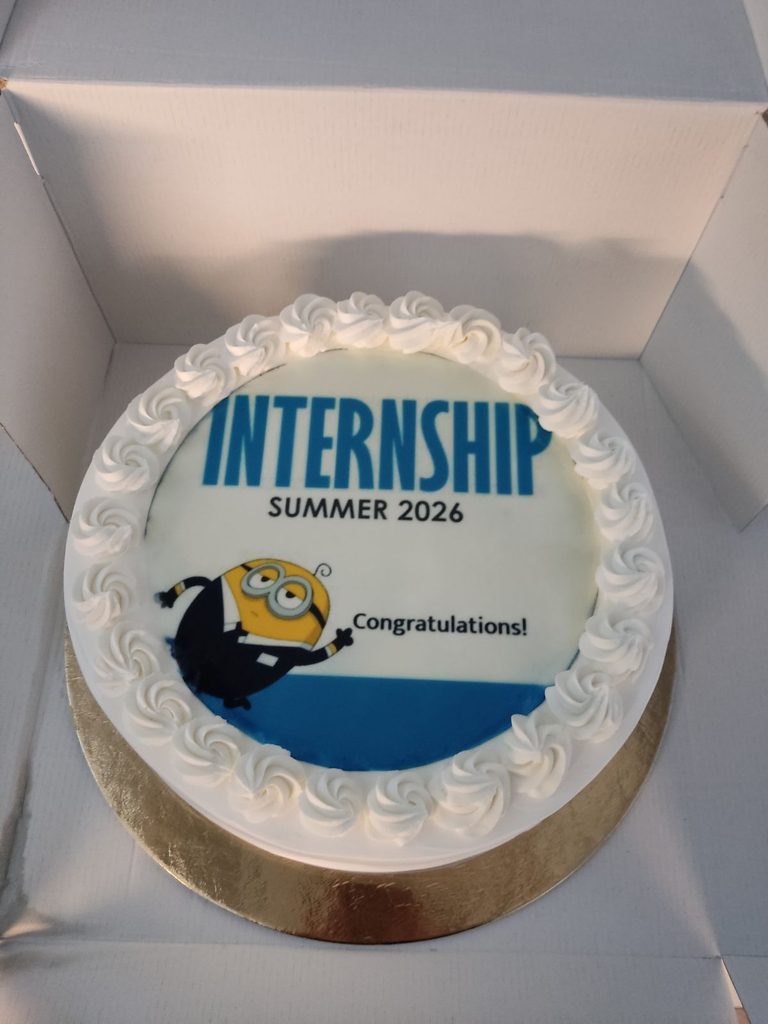
13 Interns, 7 Topics, 6 Weeks: What the 2026 Visage Technologies Internship Was Really Like
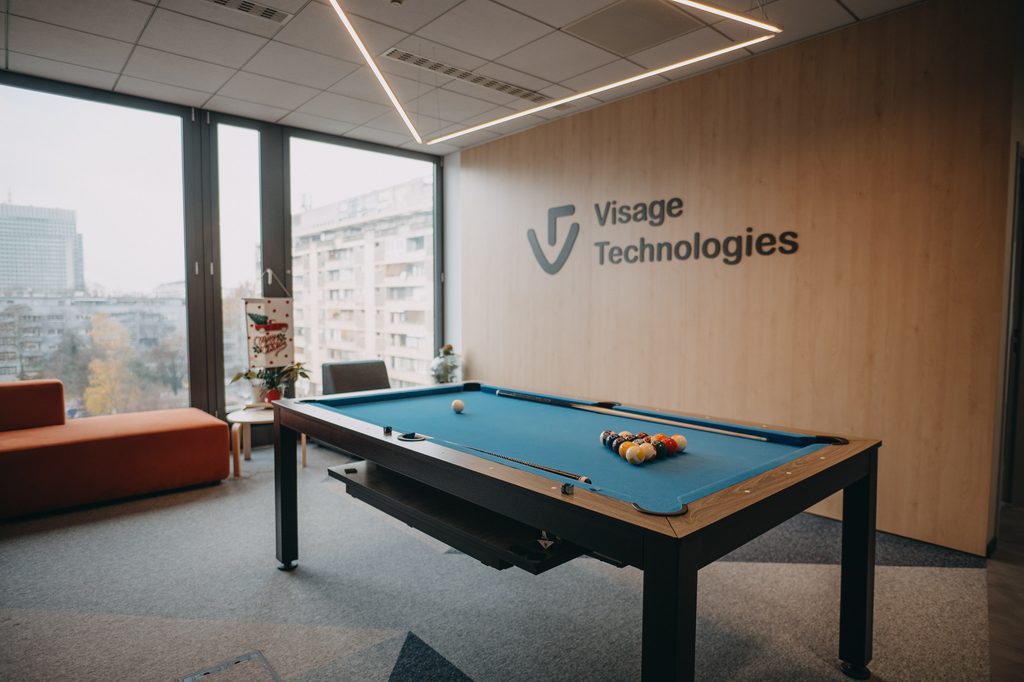
We asked our interns what stuck with them most from six weeks at Visage Technologies. They talked about vision transformers, lidar calibration, and fractional calculus. They also talked about pool. Nine out of ten of the interns who filled in our end-of-internship survey mentioned the pool table (or, in one case, billiards).
So yes, there was serious research. There was also a lot of good company. This year’s internship brought the two together again, and here’s how it went.
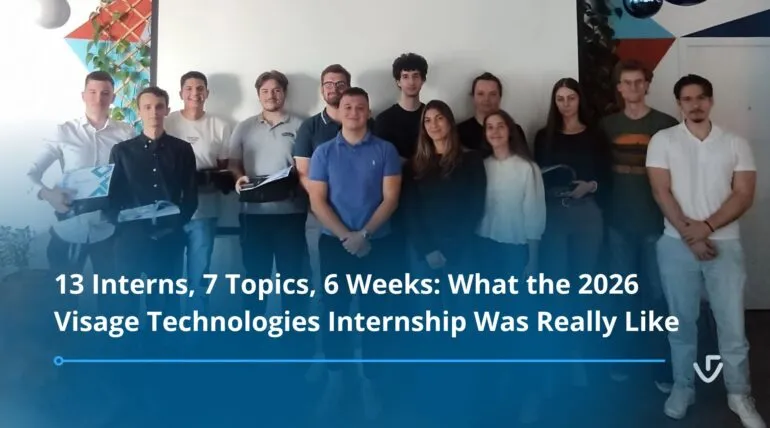
This summer we welcomed 13 interns for 6 weeks (from the last week of August to the first week of October), working on 7 research topics with the support of 8 mentors. The 13 were chosen from 94 applicants, which means fewer than one in seven made it in. Most of our interns came from the Faculty of Electrical Engineering and Computing (FER) and the Faculty of Science (PMF). Ten of the thirteen filled in our survey, and their words run through this post. If you’d like to see how this compares with earlier years, read about the 2025 internship and the 2024 internship.
“I’ve heard only good things. “
Every one of the ten who answered our survey had heard of Visage Technologies before applying, and many heard about us from people they know.
Nika followed our student openings after university friends who had interned with us told her about it. Fran D. heard it from a professor, who said his former students (now teaching assistants) had loved their internship here. Lara R. heard it from friends who’d had a great time the summer before. Dino put it simply: “I’ve heard only good things.“
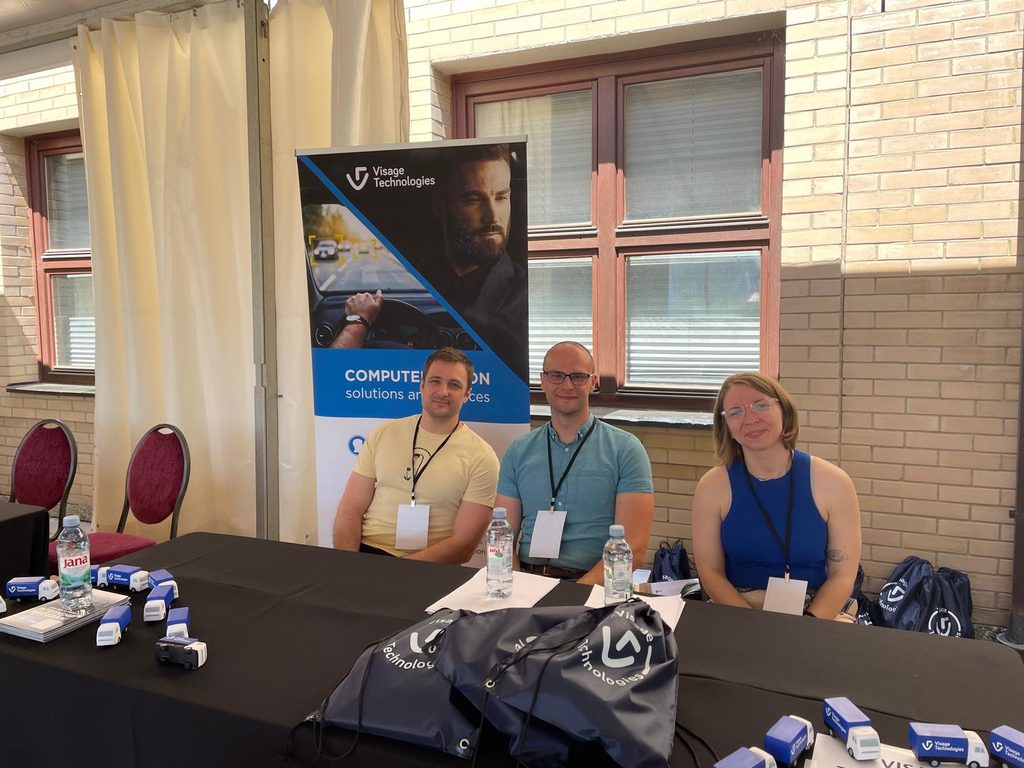
For Lara S., the push came from a conversation with our team at the Meet the Mathematicians event at her faculty. After looking through the topics, she found research projects that matched her mathematical background. “It was a no-brainer after that,” she said.
Each generation passes the word on to the next.
First impressions: nervous, skeptical, then at home
But hearing about a place and walking into it are two different things, and not everyone walked in confident.
Toni said he was “a bit scared of working in such a big and well-renowned company, but as time passed I saw that everybody is really relaxed and helpful.” Lara S. admitted that “walking into proper R&D and engineering offices felt super serious,” and she worried whether she could handle the tasks. Then her mentor took her for coffee on the first day to break the ice.
Erik expected something different altogether. He thought his project would be “a bland ‘computer vision’ wrapper web application.” That changed as soon as the team started building and realized how much work there was. Marko’s first impression was “how laid-back and chill the atmosphere is.” Dario learned that working in an office can be fun, and he hadn’t expected that to be the surprise.
A day in the life
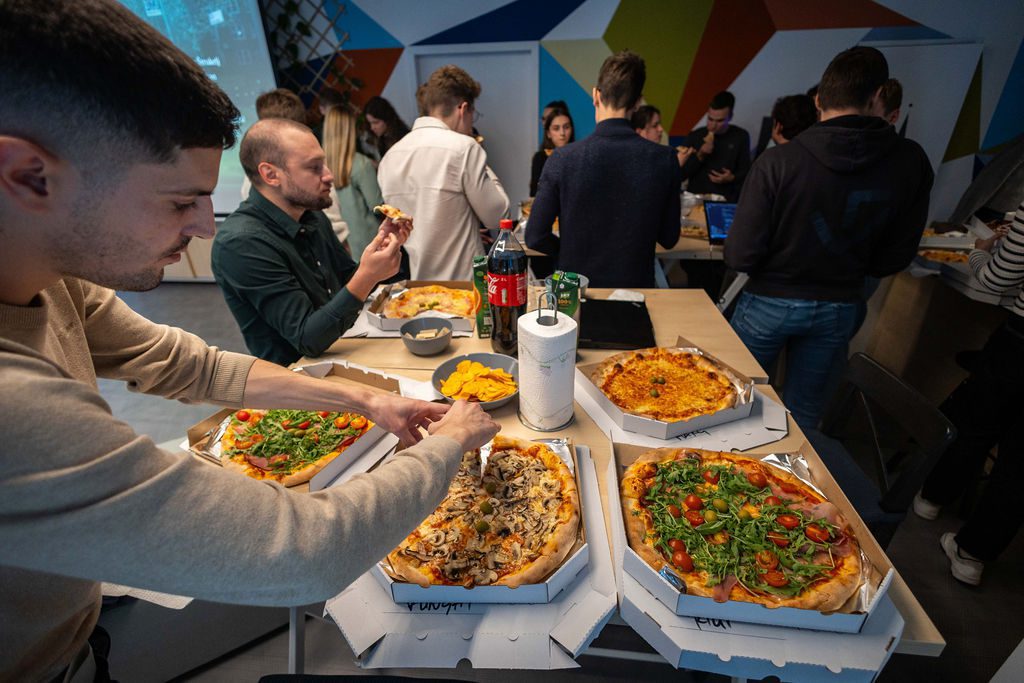
So what did the days actually look like? They differed from project to project, but they had a similar rhythm: coffee or tea and a quick sync with teammates after arrival; coding, running experiments and reading papers; a short check-in with the mentor; lunch with the other interns; a round of pool, then back to work.
Fran A. summed up his day this way: “Come into work, talk to the team about the current tasks, code, have lunch, play pool, code some more, merge git branches.”
Lara S. calls herself a night owl, but says she “actually looks forward to waking up at 7 AM every day just to come to the office.“
Seven topics, thirteen interns, one big question
Between the pool games, there was real research. Each topic was a real R&D problem connected to the work we do at Visage Technologies, and one thread ran through all of them: how do machines make sense of the world around them? Thirteen interns and eight mentors attacked that question from seven different directions. You can find the full list of topics on our internship topics page.
Some started with the most basic question a machine can ask: where am I? Dino and Toni used AprilTags scattered around a space to map it and pinpoint a camera’s position within it. They found that even a cheap webcam can deliver great results. Nikola stayed in the same territory and benchmarked on-device SLAM (simultaneous localization and mapping) algorithms.
Others went outdoors to ask what a machine should do about what it sees. Nika and Borna taught deep learning models to tell tall grass a vehicle can drive through from a bush it can’t. They collected their own dataset with cameras and lidar, and Nika said the field trip was her favorite part of the whole internship.
Then came how machines represent and learn from what they see. Fran D. and Marko rebuilt images from small colored “blobs” instead of pixels, improving the ImageGS codec’s compression and testing it with Vision Transformers. Lara S. looked at the training itself, asking whether fractional calculus, a “half derivative,” could help neural networks learn better. When the published methods fell short on transformers, she had to come up with her own ideas.
And finally, some teams turned the camera toward people. Lara R. and Emanuel asked whether an audio-visual model really learns emotion or just recognizes who is speaking. Fran A., Dario and Erik built a game controlled entirely by hand gestures as a form of physical therapy for upper limb injuries. Erik was excited that computer vision could make “a difference between someone sticking to their prescribed therapy or not.“
Different tools, different mentors, different problems. Whether it was a forest, a codec, or a game, every team came out with results and something learned.
What “challenging” looks like in R&D
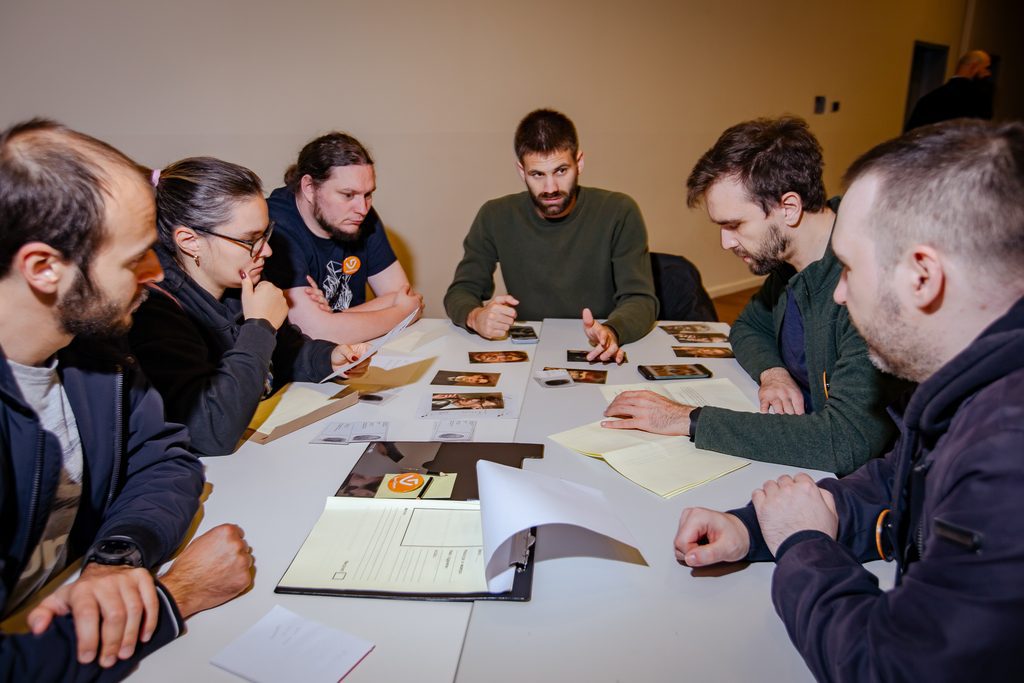
Not everything worked on the first try, of course. Research kept interns on their toes: hidden bugs in existing code, GPUs that were never quite big enough, ideas that didn’t pan out, and papers that didn’t hold up when applied elsewhere.
Dino’s team had to debug a large existing C++ implementation, which they overcame with patience and hard work. Nika found calibrating the cameras and lidar the hardest part, but “very rewarding once we have successfully done it.” Marko’s biggest challenge was more down to earth: “waiting for the computer to finish running the program.” Dario and Erik both struggled to find the right game design within the time frame.
Lara R. said her multimodal deep-learning model felt quite overwhelming at the beginning, but “over the weeks I became comfortable running and modifying experiments, analyzing model behaviour and designing my own follow-up experiments.”
Erik also had the most telling reflection on teamwork:
“This was my first time working in a team, and it truly felt like it. […] This time around it was different because every major decision was made as a team, which allowed us to be more efficient and have realistic expectations.“
Mentors: freedom with a safety net
What got interns through it, they told us, was the people around them. Behind the seven projects stood eight mentors: Anamarija, Goran, Luka J., Luka B., Nikola, Josip Ante, Stjepko and Zorana.
Interns used different words for their mentors, but the themes were the same. They were approachable, they joked around, and they let the students think for themselves.
Fran D. said his mentor Luka was “always there for us to steer us in the right direction,” and that he really cared. Erik said his mentor gave the team “all the creative and technical freedom” and showed them what a real project timeline looks like. Lara S. wrote a whole tribute to her mentor, Stjepko: he came into the office every single day, listened to her ideas, and took them seriously. She also reports beating him at pool every day.
More than an internship
And then there’s everything that has nothing to do with the project. Ask interns what they remember beyond the work (besides, of course, their mentors) and you get a surprisingly consistent list: the pool table, the coffee, the free fruit. Fran A. left a special thank-you to the Dolce Gusto Espresso Intenso (not an ad).
Toni said the best part was “meeting all of the other interns and becoming friends on the way,” and noted that the pool table helps to break the ice. Dino says he’s a better pool player than he was six weeks ago, and he has also learned to appreciate a great working environment.
Lara S. came away with a realization about the culture: “you can do great technical work while still enjoying a super social culture.” She also said it “makes a huge difference when there are no rigid hierarchical boundaries, where managers will openly come up to you, listen to what you have to say, and just chat like equals.“
Behind the jokes is something more serious, and Lara S. put it best:
“I liked how I was treated as a researcher, not just an intern.“
Advice for next year’s interns
We asked them what they’d tell next year’s group.
Lara S.: “Jump right in because you will grow a lot, both personally and technically. Don’t wait until an idea feels perfect before you share it… And don’t skip the coffee breaks, because that’s where you get to know the people behind the work.”
Fran A.: “Don’t work too hard.”
Our advice? Mostly go with Lara S.’s, and take Fran A.’s in moderation.
There is one piece of advice that keeps coming back. Three summers, same advice: ask. The interns in our 2024 and 2025 blogs told future students not to hold back their questions, and this year Lara R. said it again: “Don’t be afraid to ask questions whenever you need some clarification.“
One intern said the six weeks flew by and suggested making the internship twice as long. We’ll keep that in mind.
Join us next summer
If this sounds like the way you’d like to spend your summer, start preparing now. The 2027 internship will follow a similar timeline: six weeks starting late summer, full-time and paid, for Master’s students or soon-to-be Master’s students. Applications open in April.
See the internship page for details, browse past projects on the internship topics page, and follow us on LinkedIn to be the first to hear when applications open.
Serious research, good company, and a pool table that’s waiting for you. See you next summer.